

WIX Vilnius: Brand Awareness Campaign with a Historical Twist
Client: WIX
Role: Creative Director, Motion Artist, Creative Technologist
Formats: AI Web ChatBot, Interactive AI Character, Social Media Content, OOH Ads, Short-Form Copy
Bringing Grand Duke Gediminas, the founder of Vilnius back to life
For Wix Vilnius first-ever outdoor campaign, I teamed up with my Senior Designer, Kristijonas Marcinkevičius, to create something that could only really exist in Vilnius, something local, unexpected, and far away from the usual language of tech advertising.
Our answer was Grand Duke Gediminas, the founder of Vilnius.
Nearly 700 years ago, Gediminas sent letters across Europe inviting craftspeople, merchants and thinkers to come and build their lives in Vilnius. Bringing him back to introduce a new generation of people to Wix Vilnius felt strangely appropriate.
This time, though, we gave him access to AI.
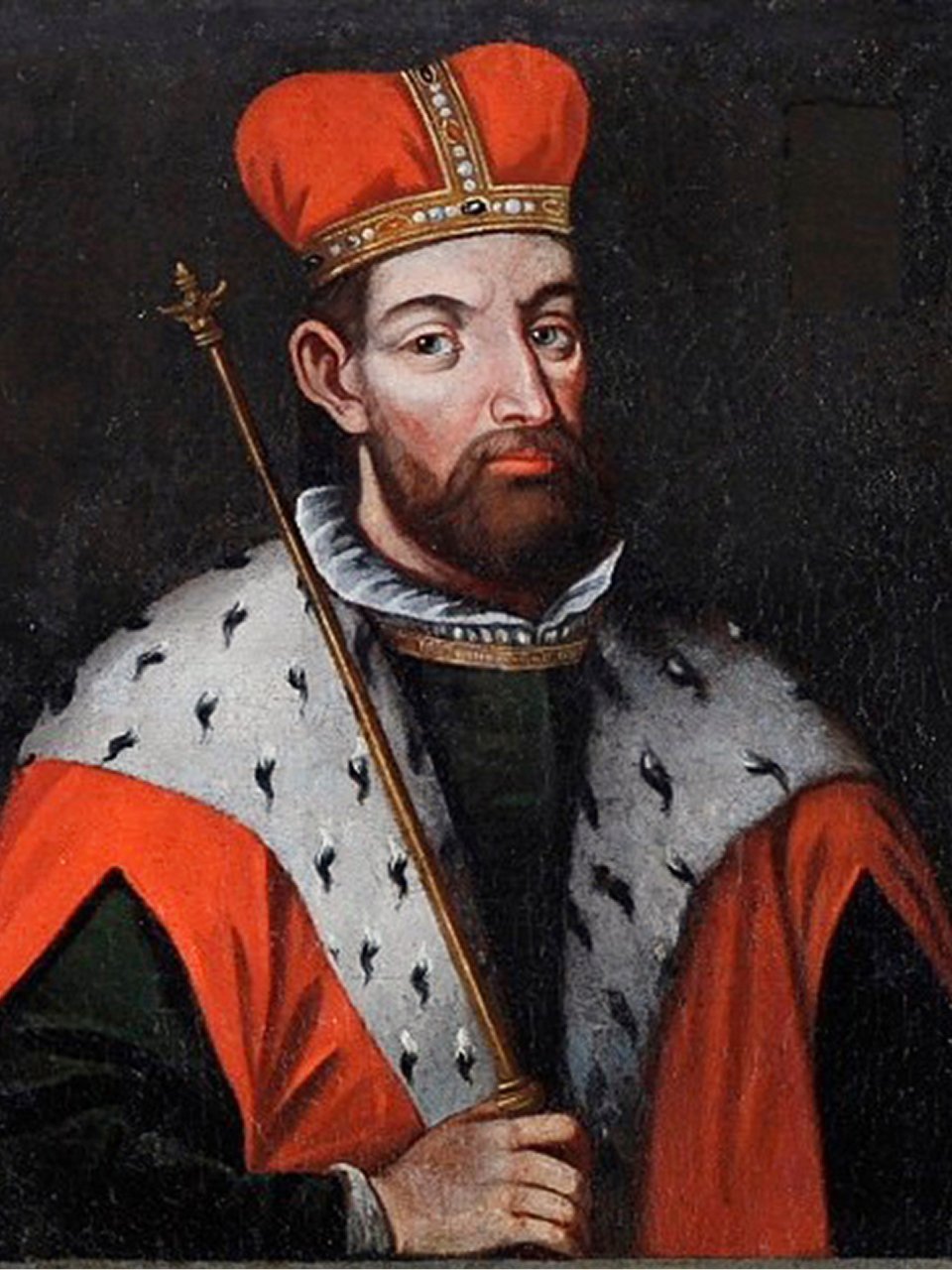
From a 400-year-old painting to a campaign
Our starting point was a centuries-old painting and a simple question: could we turn Gediminas into a living campaign character without losing what made the original image so recognisable?
Together with Kristijonas, I began exploring how generative AI could take that single historical reference much further.
The challenge wasn't creating one convincing image. We needed Gediminas to exist across an entire campaign, different poses, compositions, formats and situations, while always remaining recognisably the same character.
Using Figma Weave, we developed a node-based generative workflow that gave us much more control over that process.
Instead of treating AI as a prompt-and-hope image generator, we could build a repeatable visual system around the character and continuously adapt it as the campaign developed.
That system became the foundation for the visual world of the campaign.
Making AI behave
Of course, AI didn't magically produce finished advertising.
There was still a lot of creative direction, design, compositing, retouching, motion and experimentation involved. The work moved between generative workflows, Figma and After Effects, with outputs constantly being selected, corrected and refined until everything felt intentional.
For me, that became one of the most interesting parts of the project.
Generative AI allowed two designers and a small in-house team to approach an idea that would traditionally have required a much larger production. But the technology only became genuinely useful once we could control it.
Then we made him talk
We didn't want Gediminas to exist only as an image on the streets.
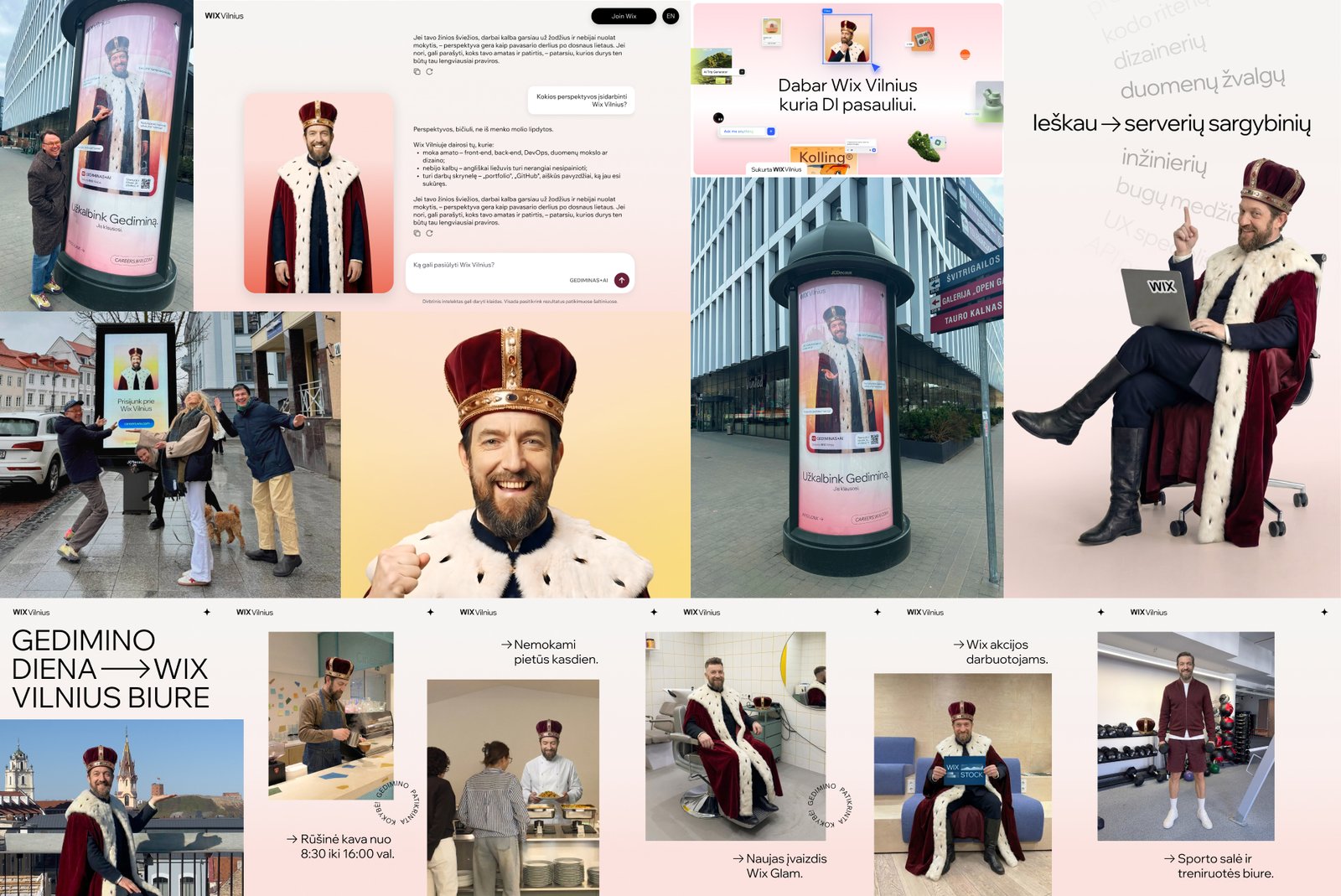
Working alongside our development team in Vilnius, the campaign extended into an interactive experience at wixvilnius.com. Our developers brought its conversational side to life, building a chatbot that allowed people to actually talk to Gediminas.
Someone encountering him on the streets could continue the experience online, ask questions and discover more about Wix Vilnius through the same character.
For me, this was one of the most interesting parts of the project, turning a brand awareness campaign into something people could actually interact with. What started as a character for the campaign became something people could engage with, making the whole idea feel much more alive.
Why it matters
For me, this project showed what can happen when design, technology and a good idea are developed together from the start.
With a small team, we were able to turn a historical reference into a complete brand awareness campaign, from the character and visual language to motion and an interactive experience. Generative AI helped us work at a scale that would have been difficult to achieve otherwise, but it was always part of the process rather than the idea itself.
More than anything, it was a chance to experiment with new tools while making something genuinely relevant to the city and the people we wanted to reach.
